
Cultivating Vitality Through Movement, Breath, and Awareness
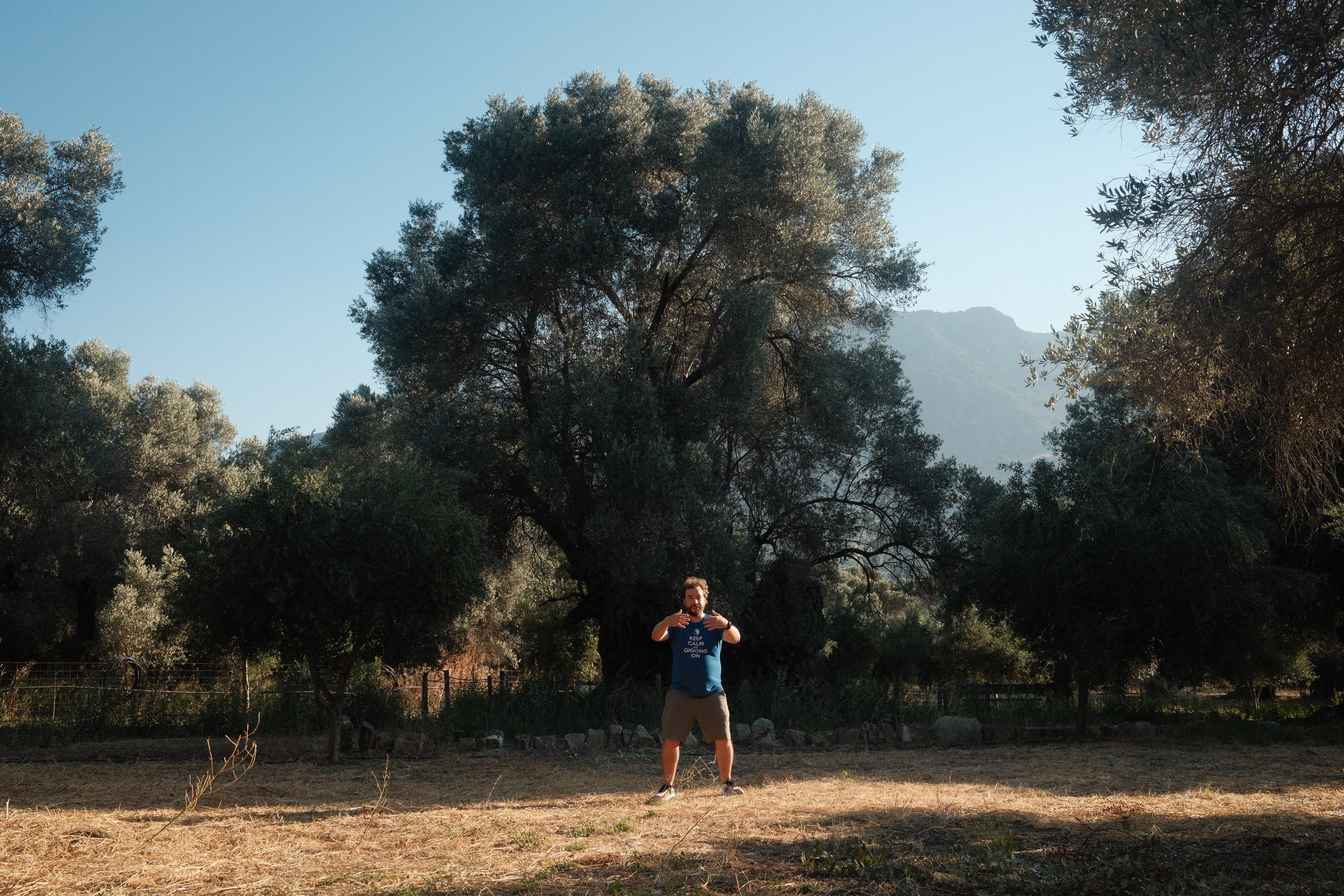
Qigong is a living practice that integrates movement, posture, breath, meditation, self-applied massage, sound, and mindful awareness to cultivate vitality, resilience, and well-being.
Whether practiced for health, stress reduction, personal growth, or self-cultivation, Qigong offers practical tools that can be woven into everyday life. Through movement, breath, touch, sound, and awareness, these practices invite us to develop a deeper relationship with ourselves, our health, and the world around us.
[View Opportunities to Practice]
Healing, Movement & Human Experience
My relationship with Qigong grew from several lifelong interests that gradually converged into the work I do today.
One path emerged from an early fascination with healing through natural medicine, herbal traditions, and holistic approaches to health. Another developed through theater, music, dance, martial arts, and movement, where I became interested in the relationship between posture, breath, awareness, expression, and embodiment. A third emerged through anthropology and a curiosity about culture, meaning, and the many ways people understand health and well-being.
Looking back, I can see that these interests were all exploring related questions through different languages.
Healing is more than treating illness.
Movement is more than exercise.
Breath is more than physiology.
Culture shapes how we understand health, meaning, and what it means to live well.
East Asian medicine and Qigong became the place where these interests converged.
For me, Qigong sits at the intersection of healing, movement, culture, and the lifelong exploration of what it means to be human.
– BEN BRODHEAD, L.AC.
What Is Qigong?
氣功
Qìgōng
(pronounced chee-gong) is one of the foundational practices of East Asian medicine.
Common English spellings: Qigong, Qi Gong, Chi Kung, Chi Gong
The word combines:
- Qi (氣): vitality, breath, life force, or the dynamic processes that animate and sustain life.
- Gong (功): skill, mastery, or proficiency developed through dedicated and consistent practice.
Taken together, 氣功 (Qìgōng) can be understood as the cultivation of vitality through dedicated practice. While often translated as “energy work” in the West, Qigong encompasses a much broader range of practices involving movement, breath, awareness, self-cultivation, and personal development.
At its heart, Qigong is a practice of cultivation.
Through movement, breath, touch, sound, and awareness, practitioners cultivate skills that support vitality, resilience, balance, and lifelong well-being.
Qigong encompasses a wide range of traditions that integrate movement, stillness, breath, meditation, self-applied massage, healing sounds, and intention in support of health, personal development, and well-being.
Unlike many forms of exercise, Qigong can often be adapted to people of varying ages, abilities, and experience levels. Some practices are active and dynamic, while others are performed standing, seated, or even lying down.
Qigong & East Asian Medicine
Within East Asian medicine, Qigong has traditionally been practiced alongside acupuncture, herbal medicine, dietary therapy, bodywork, and other methods of cultivating health.
While acupuncture and herbal medicine are often administered by a practitioner, Qigong provides a way for individuals to actively participate in their own well-being through movement, breath, awareness, self-applied massage, healing sounds, and self-cultivation.
For this reason, I often view Qigong as a natural complement to acupuncture and herbal medicine, providing practical tools that can support health between treatments and throughout daily life.
Why I Teach Qigong
Acupuncture treatments eventually end.
Herbal formulas are eventually completed.
Qigong offers something different.
It provides practical tools that people can carry into everyday life. A few conscious breaths. A standing practice. A short movement sequence. Small practices repeated consistently over time can have a profound impact on health, resilience, and well-being, especially when woven throughout your day.
As an Acupuncturist and East Asian Medicine practitioner, I have come to appreciate that healing does not only happen during treatment. While acupuncture and herbal medicine can guide and support the healing process, Qigong invites us to become active participants in our own well-being.
My goal is not to help students perform perfect movements. It is to help people cultivate a sustainable relationship with practices that support vitality, awareness, resilience, exploration, and lifelong well-being.
Whether practiced through movement, breath, self-applied massage, healing sounds, meditation, or quiet standing, Qigong offers opportunities to explore health and human potential in ways that can continue long after a class or treatment has ended.
In many ways, Qigong embodies one of the most important principles I have learned through years of study and practice:
Small practices, repeated consistently over time, can lead to profound transformation.
Teachers, Training & Lineage
My approach to Qigong has been shaped by formal training in East Asian medicine, decades of personal practice, and study with teachers representing a variety of traditions and perspectives.
My introduction to Qigong began through Robin Murphy, ND, my father Peter Brodhead’s homeopathy teacher, whose teachings in Mi Zong Qigong and Vitality Qigong first exposed me to cultivation practices and helped inspire my path toward the healing arts.
That path eventually led me to the Seattle Institute of Oriental Medicine (SIOM), now the Seattle Institute of East Asian Medicine (SIEAM), where Qigong, cultivation practices, bodywork, palpation, and experiential learning were woven throughout the curriculum. Influential teachers during this period included Paul Karsten, Tom Bisio, Frank Butler, Harrison Moretz, and Lu Mei-Hui (呂美惠), and others whose teachings emphasized embodied awareness, cultivated presence, and direct experience as foundations for both healing and clinical practice.
In more recent years, my studies entered a new phase through training with Roger Jahnke, OMD, the Institute of Integral Qigong and Tai Chi (IIQTC), and ongoing involvement with the National Qigong Association. Additional influences include John Munro, Francesco Garripoli, and other teachers whose perspectives have enriched my understanding of cultivation, healing, and human potential.
These experiences have exposed me to diverse lineages, methods, and perspectives. Rather than seeking a single definitive approach, I have come to appreciate the value of learning from many traditions while honoring the wisdom and context from which they emerge.
While I hold certifications in several Qigong systems, I view those credentials as milestones rather than destinations. I remain a student first. My teaching continues to be informed by ongoing practice, continuing education, personal exploration, and deep gratitude for the teachers who have shared their knowledge and experience.
Ways to Practice
Qigong can be explored in many different ways depending on your interests, goals, experience level, and preferred learning environment. My intention is to offer opportunities for individuals to engage with these traditions in meaningful and sustainable ways.
Community Practice
Qigong is traditionally learned and practiced within community. The Isle of Hope Qigong Community Practice brings together practitioners and teachers from a variety of backgrounds, creating opportunities for shared learning and exploration.
Different instructors facilitate practices throughout the week. I currently lead the sunrise qigong sessions on Fridays at 7:00am, focusing on foundational practices that cultivate vitality, resilience, awareness, and lifelong well-being.
Community practice offers a welcoming entry point for beginners while providing experienced practitioners an opportunity to deepen and sustain their practice.
Online Classes
Participate in live online classes and develop a sustainable personal practice from home.
Whether you’re new to Qigong or looking to deepen an existing practice, online sessions provide a flexible and accessible way to engage with the material.
View Schedule →
In-Person Classes
Regular in-person classes at Eight Cranes are planned to begin as our teaching space becomes available.
These classes will focus on foundational practices, self-cultivation, and practical applications for everyday life.
Coming Soon
Private Instruction
Private sessions provide individualized guidance for those interested in therapeutic applications, personal practice development, or deeper exploration of specific Qigong methods.
Schedule a Private Session →
Qigong Healing
In addition to teaching Qigong, I have completed practitioner training in Qigong Healing through Long White Cloud Qigong and am certified as a Qigong Healing Practitioner.
During practitioner training, Qigong Healing sessions were both received and provided under supervision, offering direct experience with the methods being taught. These sessions emphasized guiding qi, supporting energetic regulation, holding specific points, and applying healing techniques that emerged from the Long White Cloud Qigong for Self-Healing curriculum.
Qigong Healing is a traditional approach that applies principles of Qigong cultivation to support balance, regulation, and well-being. Sessions may involve guiding qi, working with traditional energetic pathways and centers, holding specific points, and applying techniques developed through the Long White Cloud system.
This approach works with traditional concepts including the Three Dantians, Central Channel, Extraordinary Vessels, meridians, organ systems, and other frameworks used to support balance, awareness, vitality, and the body’s natural capacity for self-regulation.
Qigong Healing may be offered as a stand-alone session or incorporated into acupuncture treatments when appropriate.
Areas of Exploration
My teaching draws from a variety of traditions and areas of study, including:
Foundations & Self-Cultivation
- Foundations of Qigong (Jing, Qi, and Shen)
- Breath, Awareness, and Meditation
- Primordial Qigong
- Alchemy, Self-Cultivation, and Internal Development
Health & Healing Practices
- Qigong for Self-Healing & Activating the Healer Within
- Organ Cleansing Qigong
- Healing Sounds
- Yangsheng: Healthy Aging & Longevity
- Self-Applied Massage & Acupressure
Movement & Form Traditions
- Tai Chi Easy
- Mi Zong Qigong
- Vitality Enhancement Qigong
- Wuji Hundun Qigong
Everyday Cultivation Practices
- Seasonal Cultivation Practices
- Qigong Walking
- Cultivating Qi in Daily Life
Future classes, workshops, and educational programs will explore these and other topics in greater depth.
Frequently Asked Questions
Answers to some of the most common questions about Qigong practice, instruction, and getting started.
Resources & Continuing Study
Qigong is a lifelong practice of learning, discovery, and cultivation. Explore articles, recommended readings, educational materials, and practice resources related to Qigong, East Asian medicine, healing, movement, and self-cultivation.
Join Me in Practice
Whether your interest is health, stress reduction, meditation, personal growth, healthy aging, or simple curiosity, I invite you to explore these practices for yourself.
The path unfolds one breath, one movement, and one moment at a time.